 EMR Guide
Psychiatry EMR, Explained
How prescriber-led practices run evaluation, medication management, and measurement over time, and what changes when a practice has real control over its workflow.
Read the guide
The initial psychiatric evaluation is long, narrative, and carries its own billing code. Canvas documents it without forcing psychiatry into a template built for a fifteen-minute primary care visit.
Electronic prescribing covers Schedule II through V, with state database checks through the Bamboo Health PMP Gateway and delegation rules that control who signs for which prescriber.
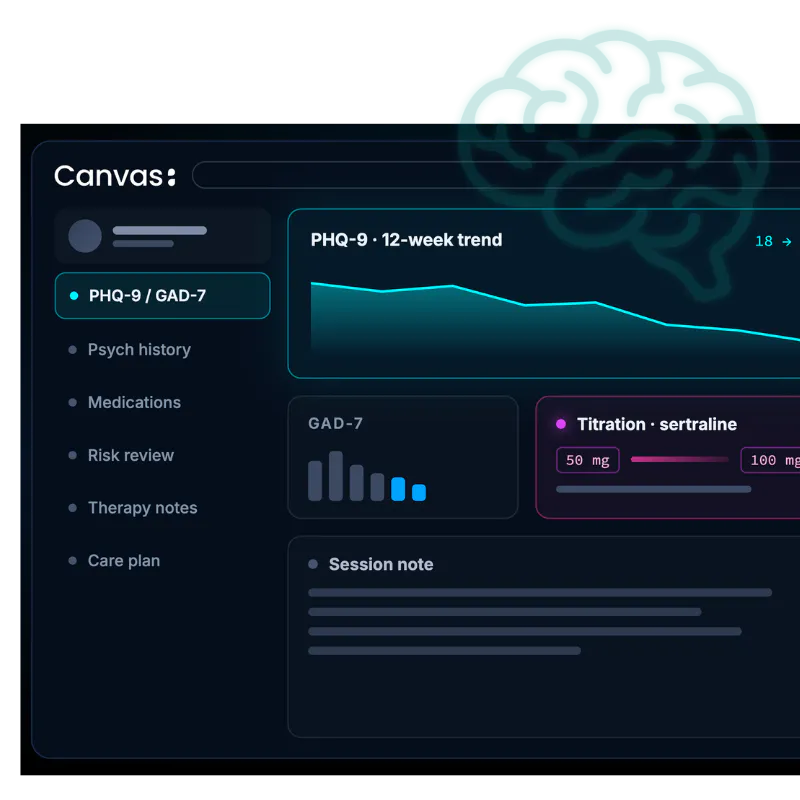
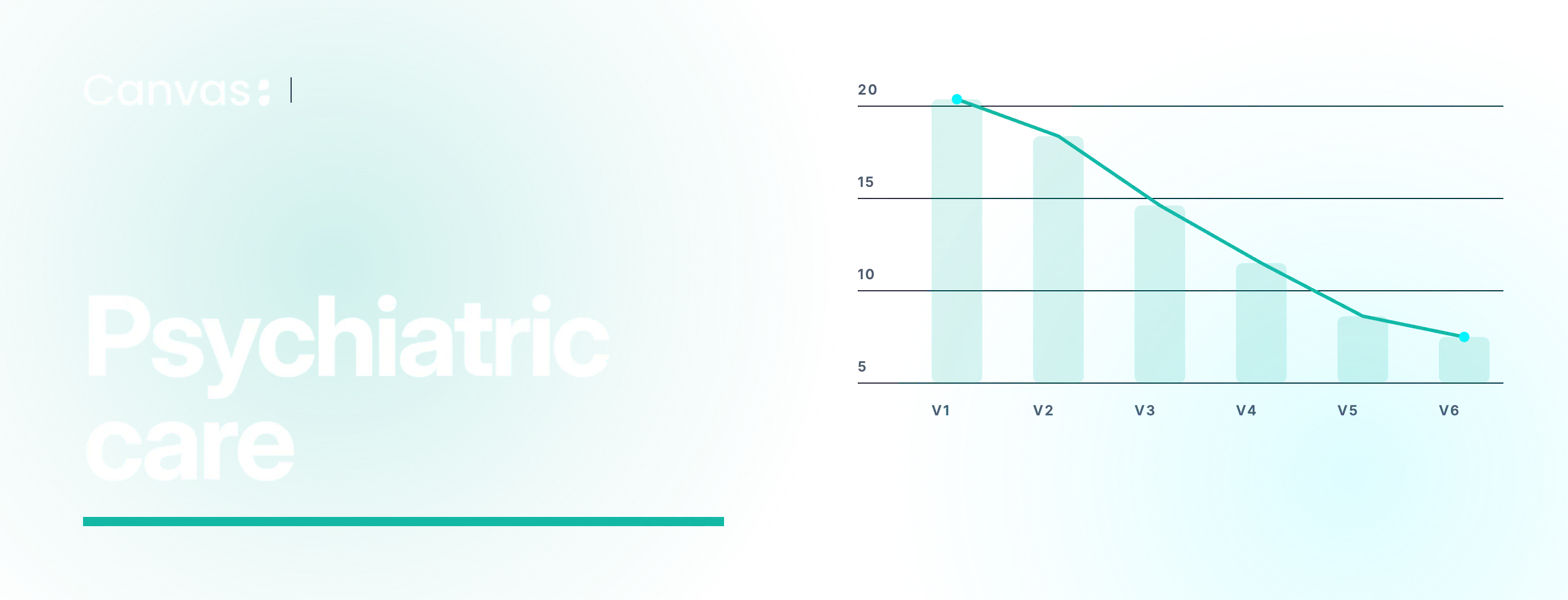
Instruments are scored the moment they are submitted and stored as discrete data, so the clinician opens the visit seeing how the number moved.
The full picture of how a psychiatric practice runs on Canvas, and how the options on the market compare.
EMR GuideHow prescriber-led practices run evaluation, medication management, and measurement over time, and what changes when a practice has real control over its workflow.
Read the guide Compare EMRs
What a psychiatric practice actually needs from its software, how the platforms compare, and the questions to ask before you buy.
Compare EMRs
PHQ-2 and PHQ-9 score on arrival, a positive short screen opens the full instrument automatically, and severity charts over time.
GAD-2 and GAD-7 run the same scored, trended path, so anxiety and depression can be viewed against each other over the same stretch of treatment.
Mood screening and longitudinal tracking, with prescribing on the same controlled substance workflow as the rest of the practice.
Routine bloodwork protocols tie to antipsychotic prescribing, so metabolic monitoring is part of the workflow rather than a separate list.
AUDIT-C and other substance use screeners score and trend the same way the depression and anxiety instruments do.
Stimulant prescribing puts Schedule II through V, state database checks, and prescriber delegation into routine visits.
Describe the workflow your practice needs and get a working plugin back. Every capability below is running today, and each one can be extended and customized to match how your practice actually works.
A positive PHQ-2 opens the full PHQ-9 in the same note and carries the shared answers forward, so the clinician fills in only what is new.
Scored instruments trend over time on a single tab. See the latest result, the change since last visit, and drop any trend into a note in one click.
Send questionnaires through the portal ahead of an appointment. Answers land in the chart as structured data, so the score is waiting when the patient arrives.
Set which users can sign for which prescriber, and stop a prescription before it routes to a pharmacy in a state where nobody holds a license.
A national leader in interventional psychiatry implemented Canvas in six weeks, putting clinical documentation, prescribing, lab ordering, and billing on a single platform. Their product, engineering, and design teams saved at least six months of dedicated focus.
Prescriber-led outpatient psychiatric practices, including psychiatrists and psychiatric mental health nurse practitioners running medication management. It fits solo prescribers, group practices, and multi-state telepsychiatry models, along with practices delivering in-clinic interventional treatments.
Yes, for Schedule II through V through DrFirst over the Surescripts network. Enrollment requires identity proofing and a hardware token under DEA rules, so it belongs in the onboarding plan rather than being switched on the first afternoon.
Yes. Canvas integrates with the Bamboo Health PMP Gateway, so a prescriber runs the check from the note and the result is documented in the record with who checked and when. Requirements vary by state, since states run different systems and permit different levels of detail.
A core set ships built in, including PHQ-2, PHQ-9, GAD-2, GAD-7, and AUDIT-C, with more available as installable plugins. If your practice needs an instrument that is not in either set, we add it and it is scored and LOINC-coded like everything else.
Yes, and it is the main reason practices with an unusual care model choose Canvas. Describe what you need in Studio, built on CPA (Claude Plugin Assistant), and get a working plugin back, or build directly on the Canvas SDK.

Learn E/M time-based coding: what should be documented for time-based coding and how to use documentation for coding to reduce denials and stay compliant
Read more
Learn how integrated behavioral health in primary care improves outcomes, reduces stigma, and how a programmable EMR connects behavioral and physical care.
Read more
Learn how healthcare workflow automation reduces admin burden with EMR-native workflows for intake, scheduling, billing, referrals, and prior authorization.
Read moreTry the psychiatric trial EMR today, no commitment required. Open a chart, commit a PHQ-2, and watch what happens next.


Evaluate, prescribe, and measure response in one record, on a platform built around how psychiatric practices actually work, not a generic template you work around.